

Mugshots on a Mug — Different Faces, Same Camera | Marysville Police Portraits
DIFFERENT FACES, SAME CAMERA
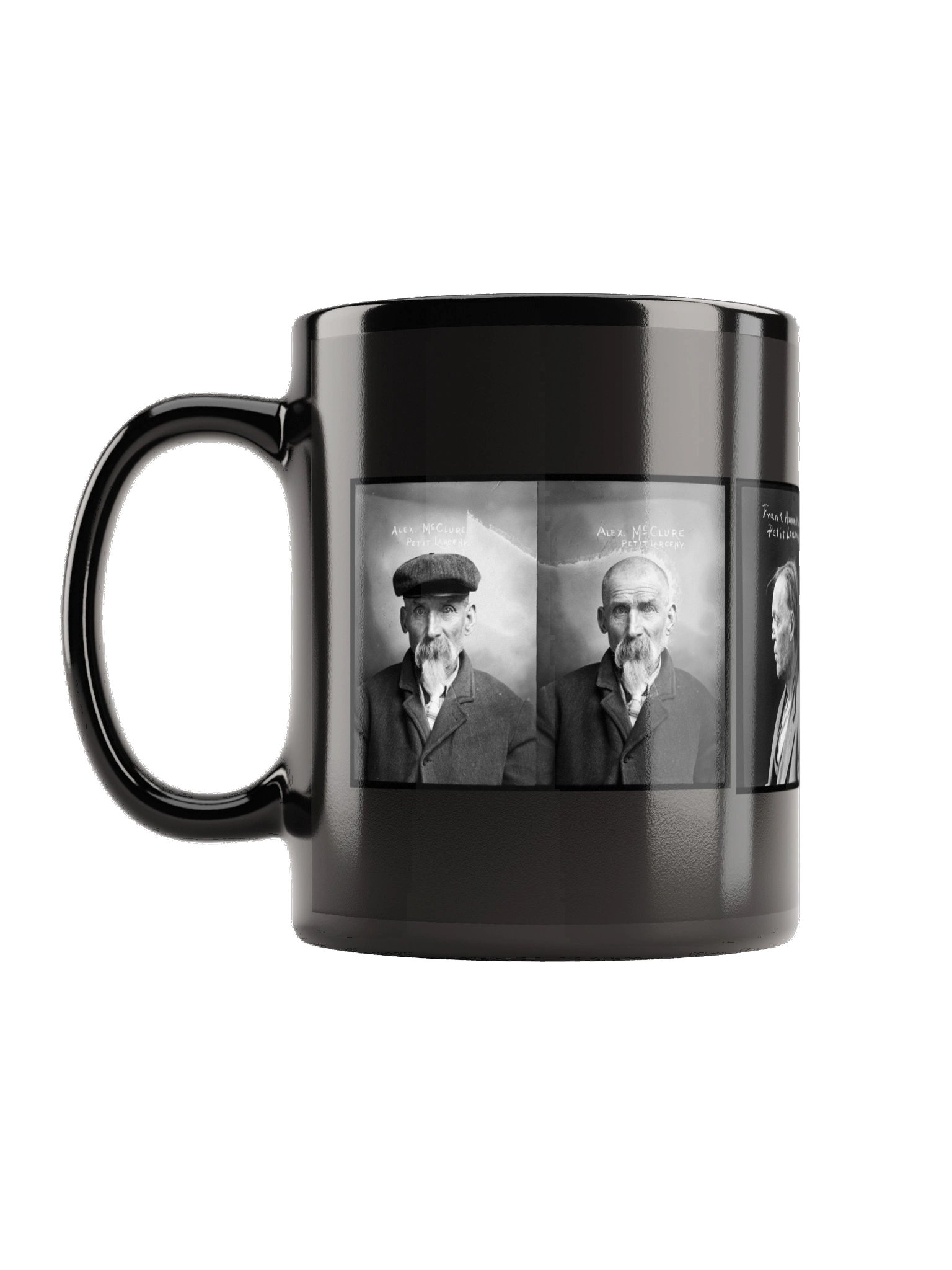
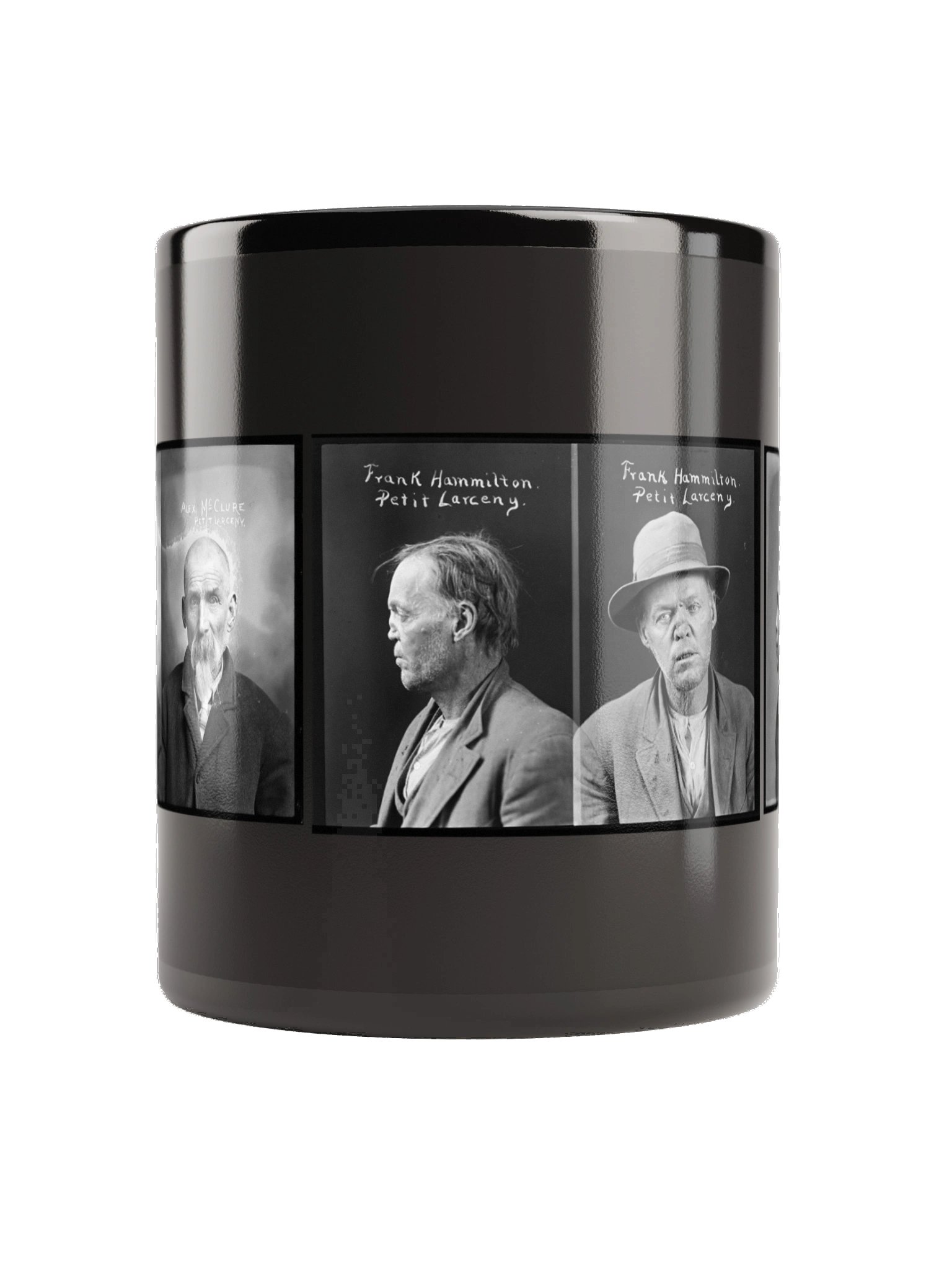
Three men. Three generations of faces. One police camera recording them all.
Marysville, California, approximately 1900–1908.
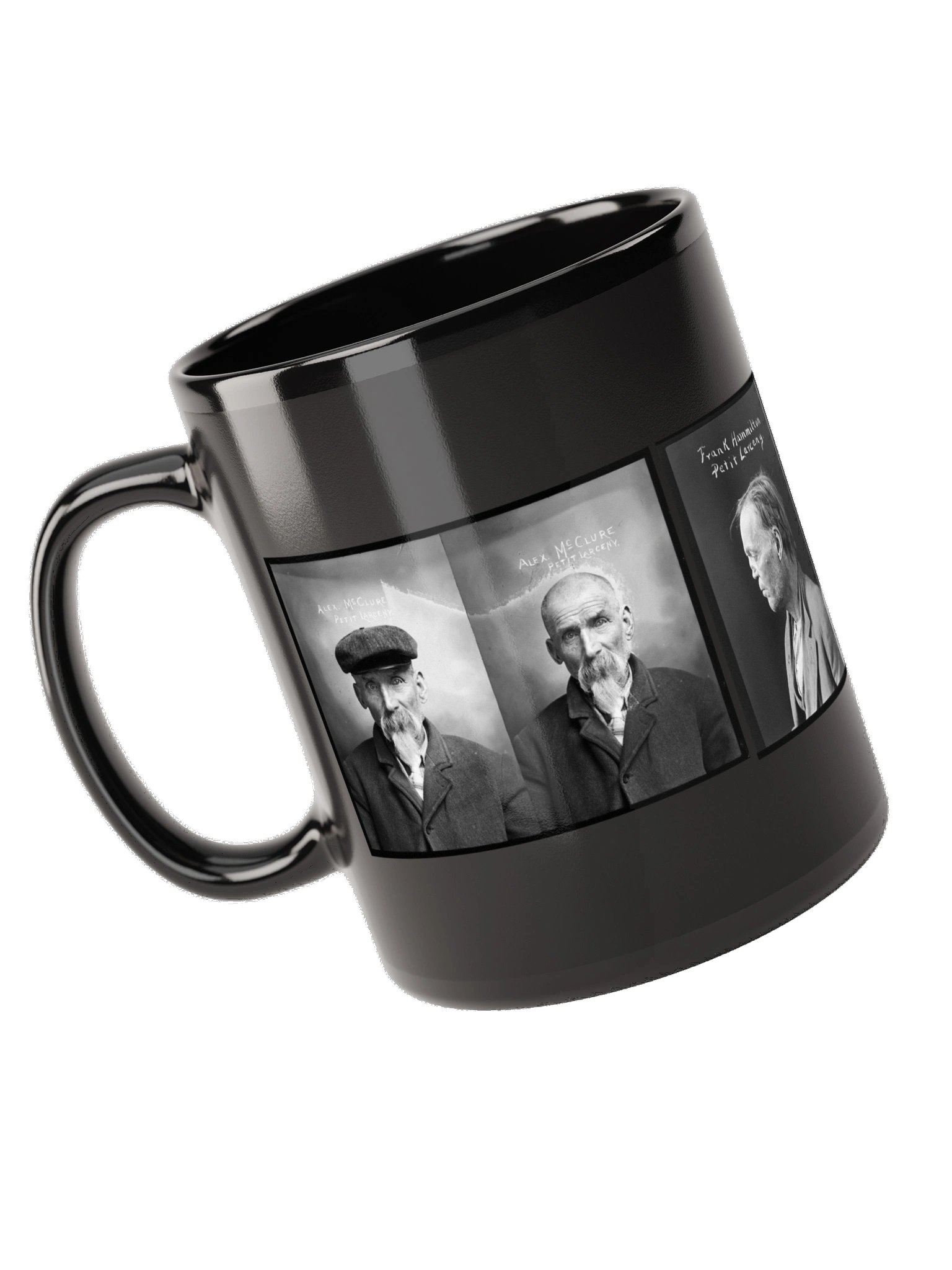
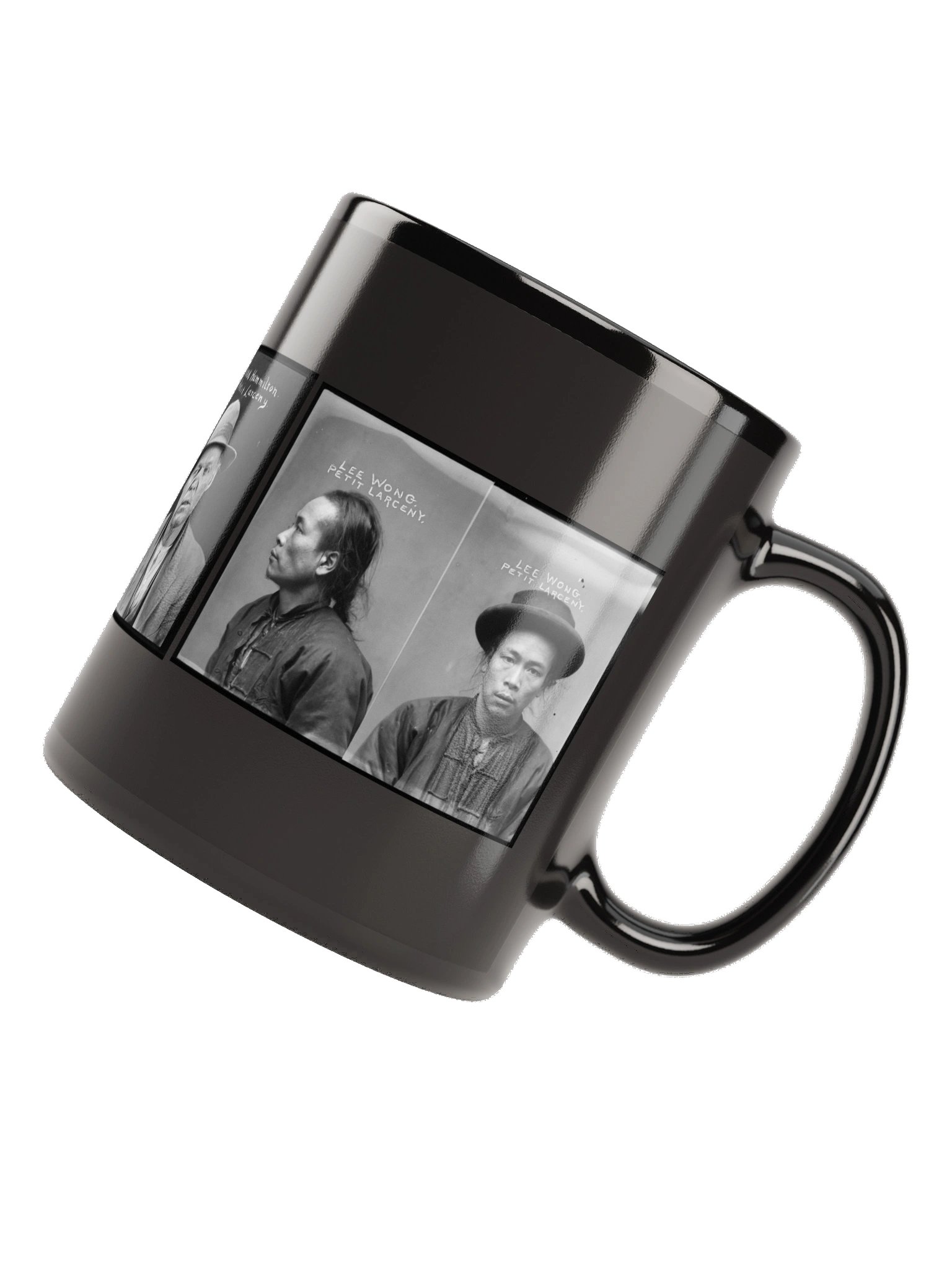
This glossy black ceramic mug features three historical police photographic diptychs from the remarkable collection of Clara S. Smith, a professional portrait photographer working in Northern California at the beginning of the twentieth century.
Each man appears twice: in profile and facing the camera.
Yet the differences between them are striking.
THREE MEN BEFORE THE CAMERA
The first man wears a flat cap and has a long, distinctive white beard. His weathered face and steady expression give the portrait an almost nineteenth-century appearance.
The second, photographed in a jacket and broad-brimmed hat, has a closely lined face and an older man's features.
The third appears younger, with longer hair, a work shirt, and a hat. His photographs suggest a very different visual presence from the two older men.
Their ages, occupations, and personal histories cannot be established from appearance alone.
But their differences are immediately visible.
And all three were subjected to the same photographic procedure.
CLARA SMITH — THE POLICE PORTRAIT
Clara S. Smith operated the Ramona Art Studio in Marysville, where she photographed families, children, newlyweds, and local residents.
She also produced identification portraits for local authorities.
Unlike the impersonal mugshots familiar today, her photographs retained the techniques of professional studio portraiture: carefully arranged lighting, controlled backgrounds, and attention to individual appearance.
The men were photographed as subjects of police identification, yet the resulting images often resemble conventional studio portraits.
ONE SYSTEM, MANY FACES
Police photography was intended to record, identify, and classify individuals.
The standardized combination of frontal and profile views reduced different people to comparable visual records.
Yet something escapes that uniformity.
Faces, clothing, hairstyles, gestures, and expressions preserve distinctions that the identification procedure could not entirely eliminate.
We cannot know what these men were thinking. We can, however, see how differently they presented themselves before the same camera.
THE REDISCOVERY
Decades later, artist and photographer Arne Svenson rediscovered hundreds of Clara Smith's surviving glass negatives.
His research resulted in the 1997 book Prisoners: Murder, Mayhem, and Petit Larceny, which brought these forgotten portraits to a wider audience.
WHY MUGSHOTS ON A MUG?
In English, mug means both a drinking vessel and, informally, a person's face.
A mugshot is a police identification photograph.
Three historical mugshots on an actual mug create an unexpected linguistic connection between photography and everyday design.
THE DESIGN
Three original-style black-and-white photographic diptychs are arranged around a glossy black ceramic mug.
Available in 11 oz and 15 oz sizes.
**READING FRAM
More details
- Ceramic
- 11 oz mug dimensions: 3.85″ (9.8 cm) in height, 3.35″ (8.5 cm) in diameter
- 15 oz mug dimensions: 4.7″ (12cm) in height, 3.35″ (8.5 cm) in diameter
- Dishwasher and microwave safe
EU GPSR Product Information:
- Manufacturer contact information
- Name: Reading Frames
- Email: reading-frames-shop@support.fourthwall.com
- Postal address: PO Box 5696 Santa Monica, CA 90405
- Additional information: This product is made for adults. Meets the lead and cadmium level requirements. 2 year warranty in EEA and UK, established by Directive 1999/44/EC.
Size & Fit
- 11 oz mug dimensions: 3.85″ (9.8 cm) in height, 3.35″ (8.5 cm) in diameter
- 15 oz mug dimensions: 4.7″ (12cm) in height, 3.35″ (8.5 cm) in diameter
Quality Guarantee & Returns
- Quality is guaranteed. If there is a print error or visible quality issue, we'll replace or refund it.
- Because the products are made to order, we do not accept general returns or sizing-related returns.