
The Living Canvas — Japanese Irezumi, 19th Century | Vintage Photography T-Shirt
THE LIVING CANVAS — JAPANESE IREZUMI
A human body transformed into a work of art. A rare glimpse into the visual culture of nineteenth-century Japan.
Japan, late nineteenth century.
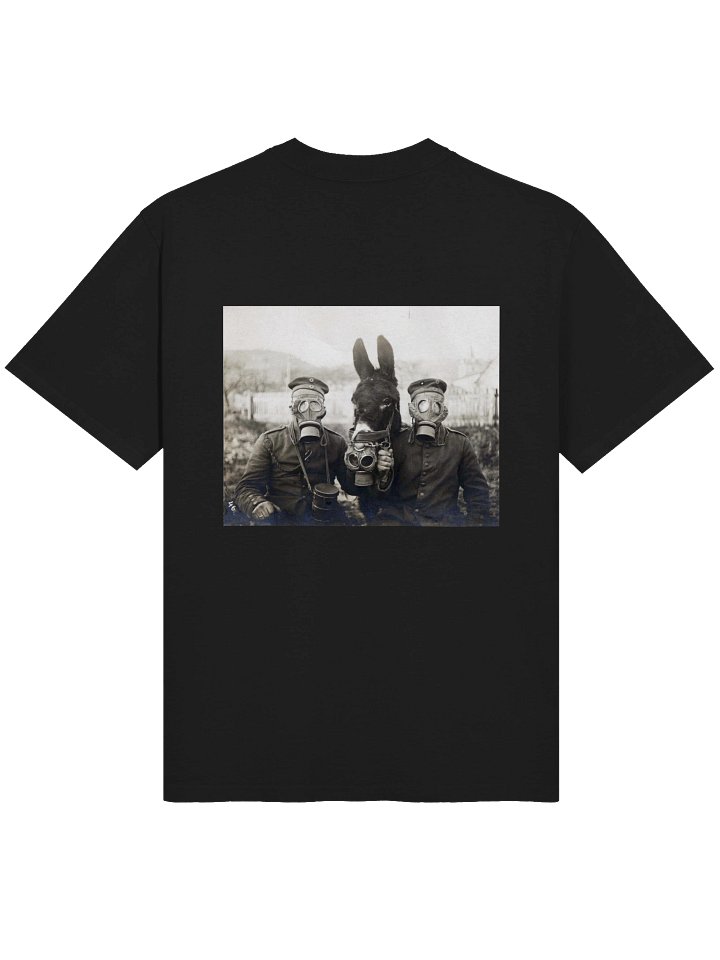
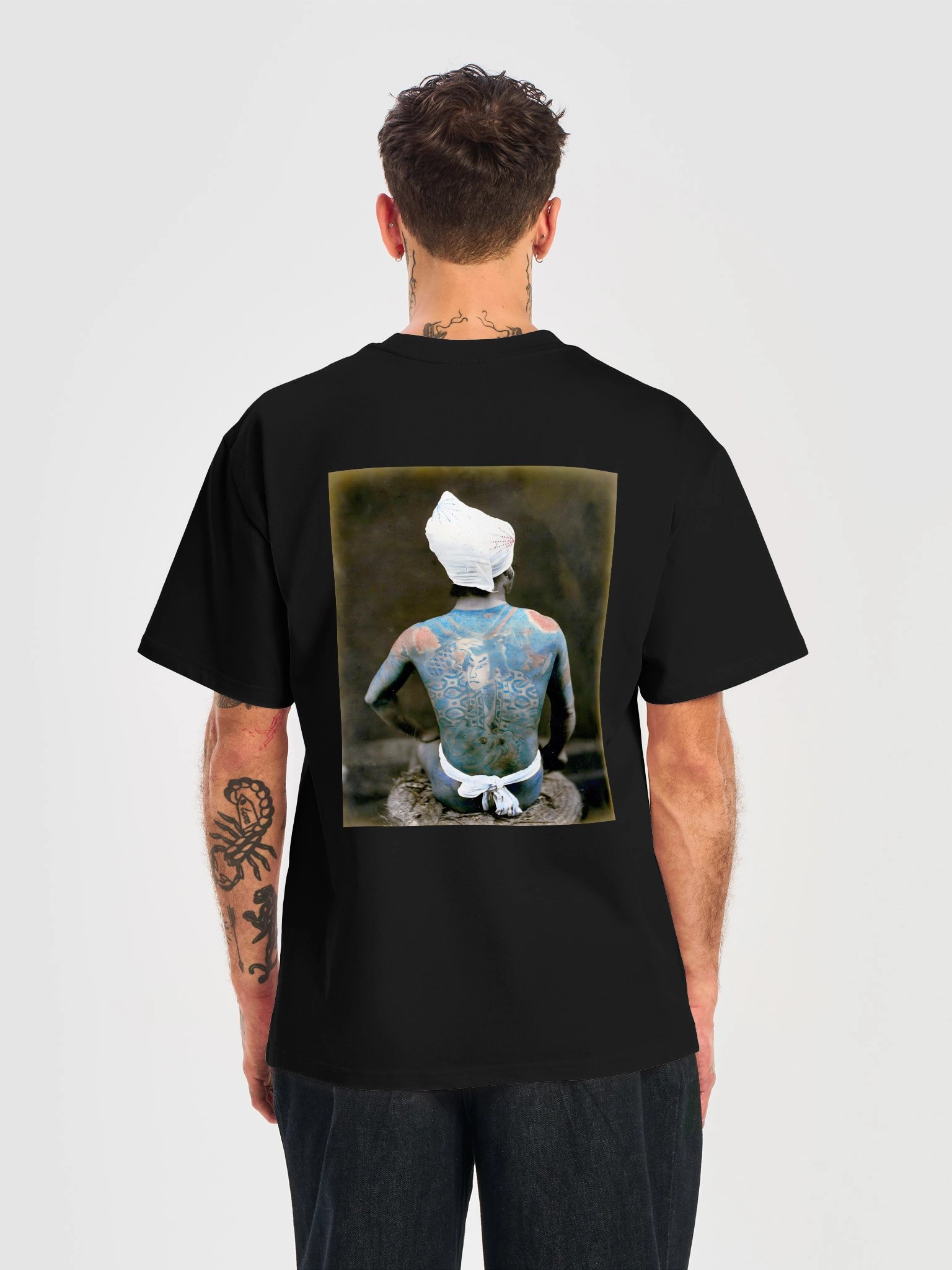
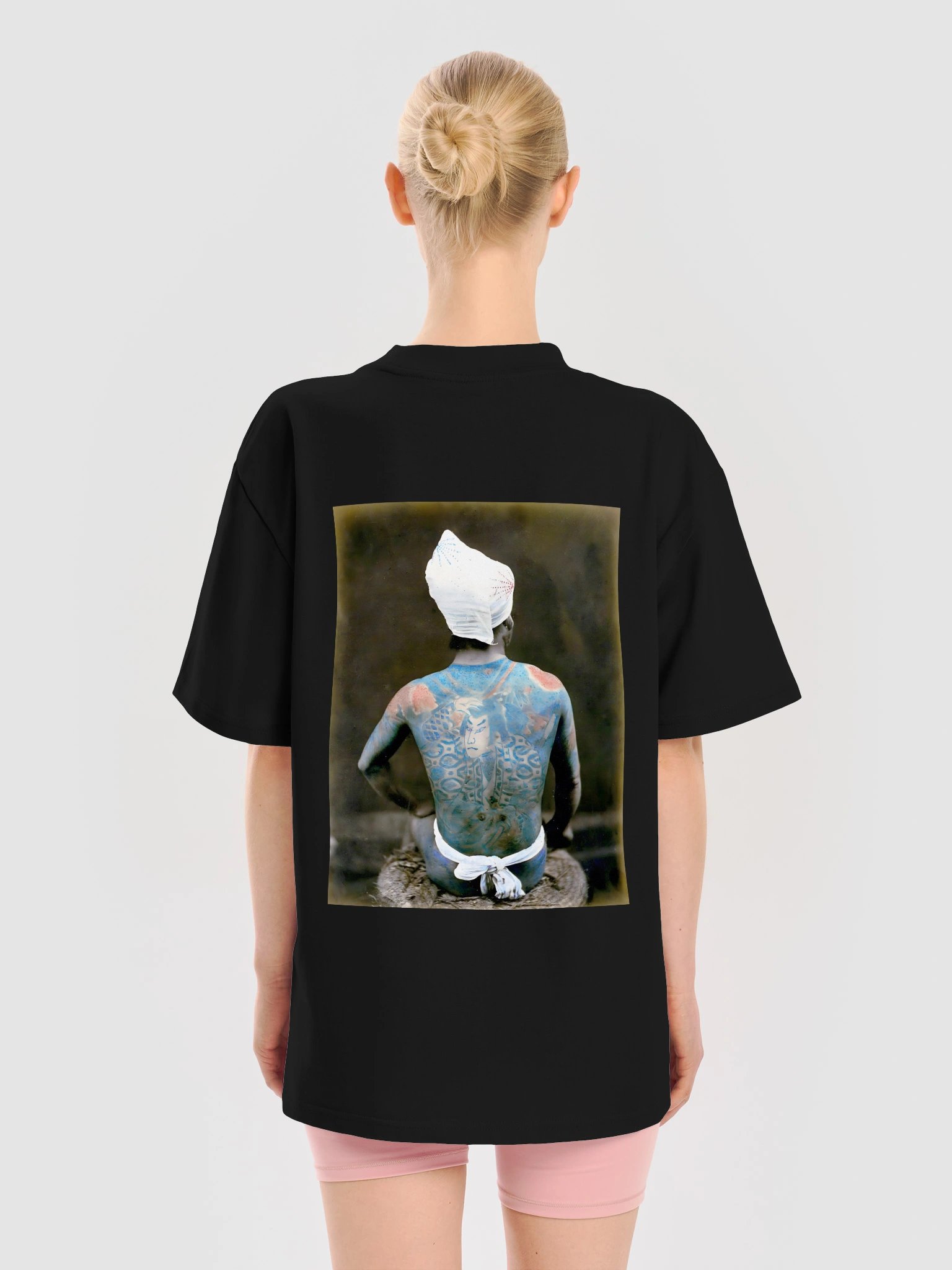
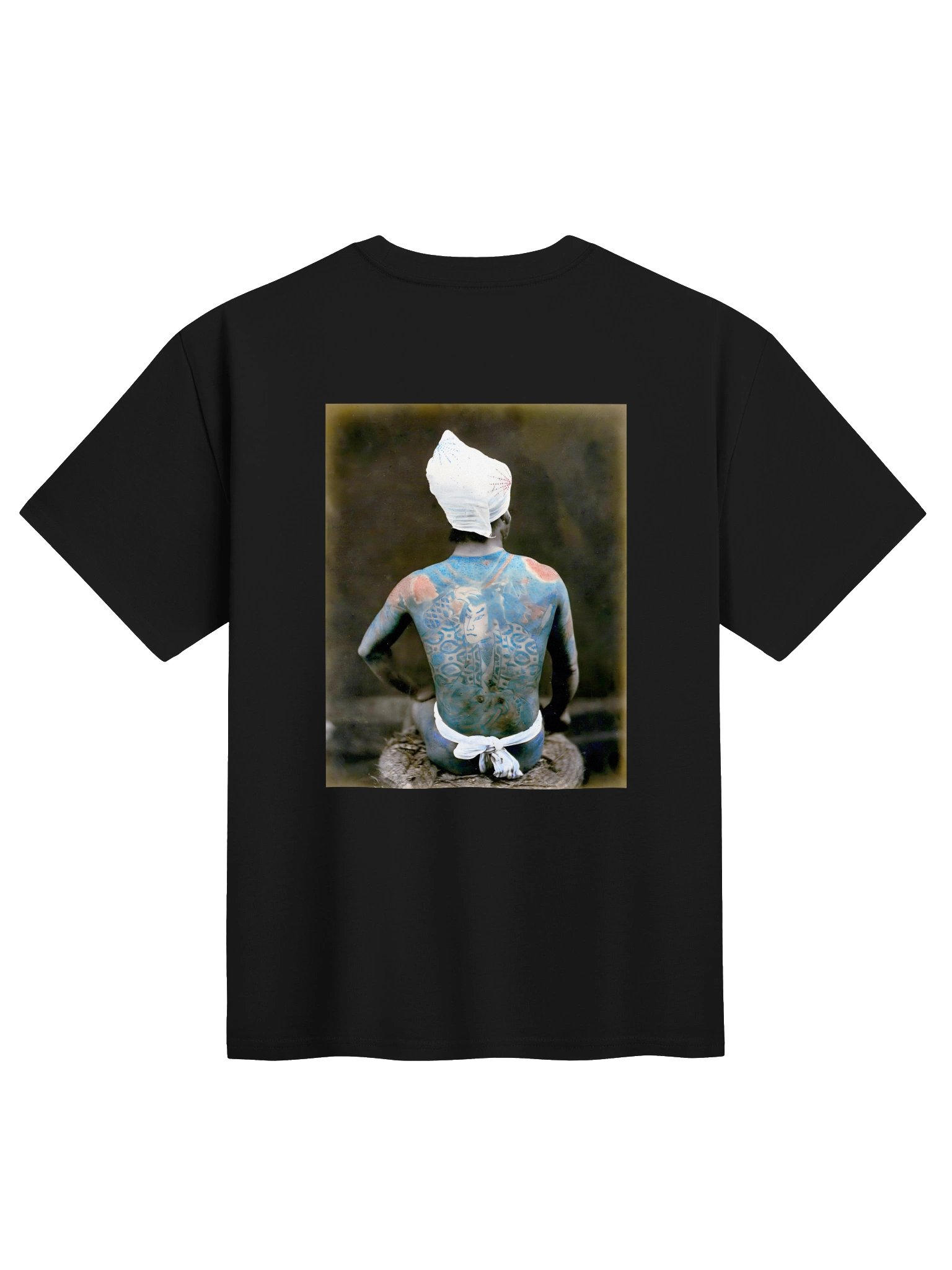
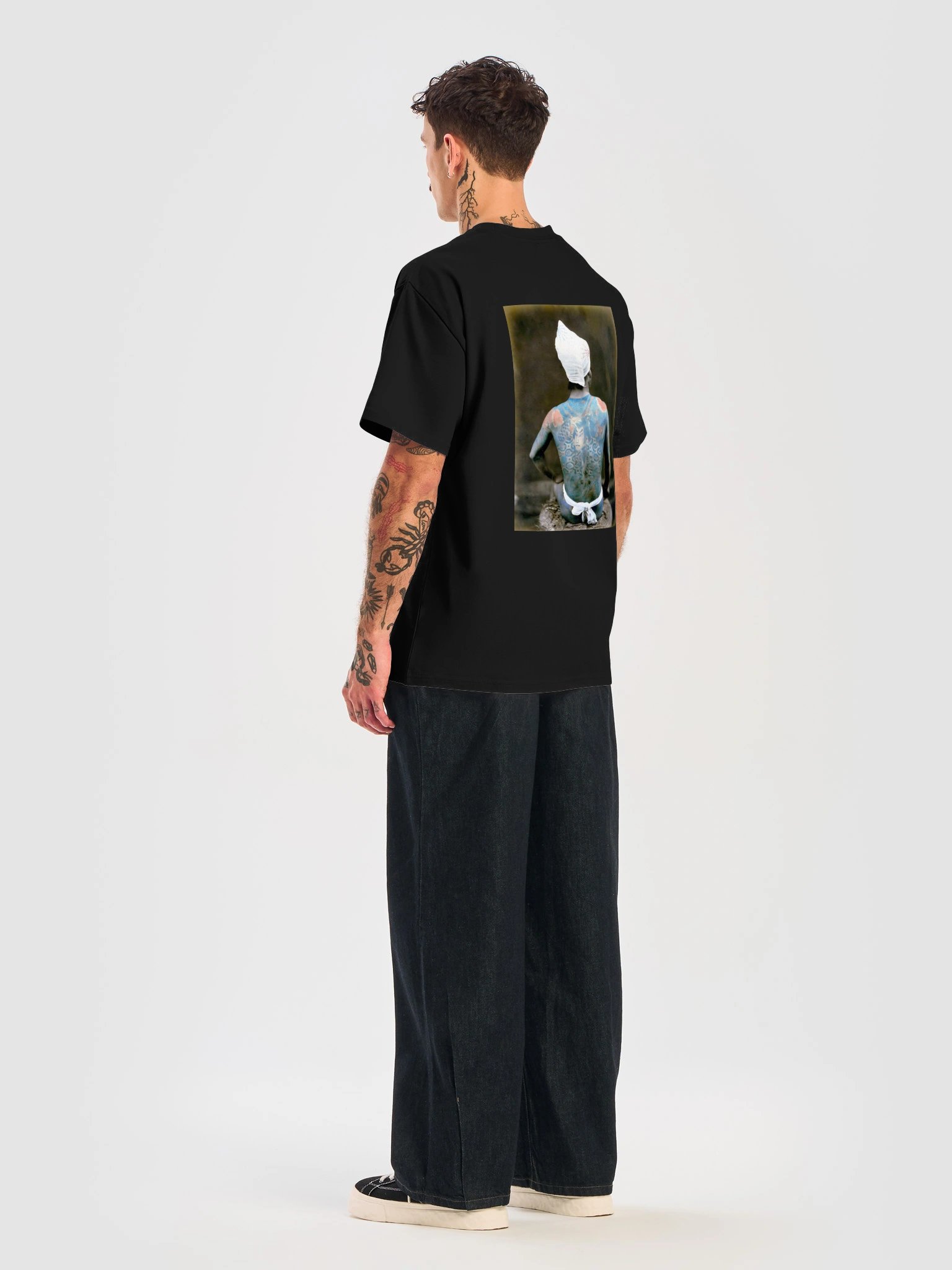
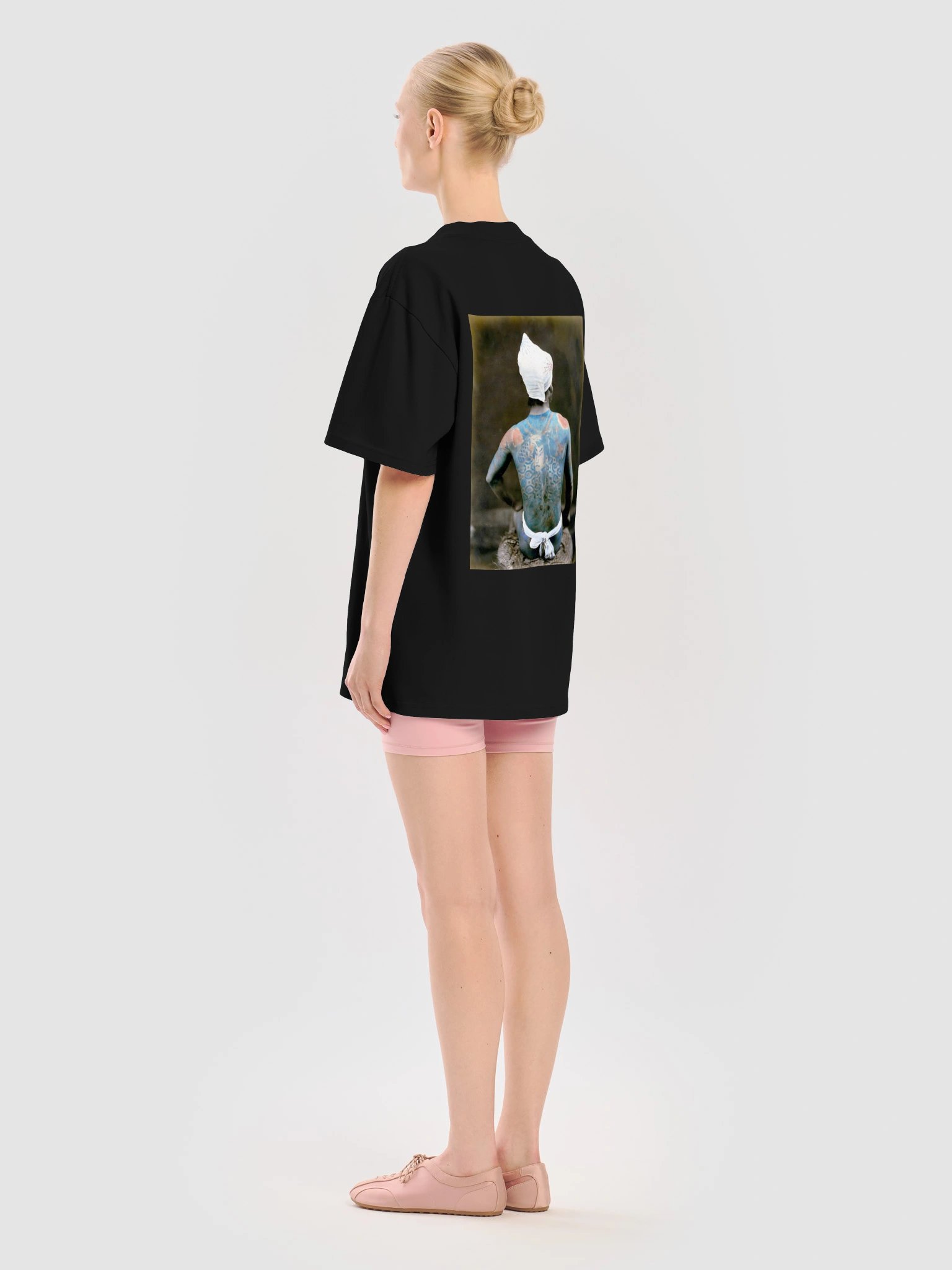
A Japanese man sits with his back turned toward the camera, revealing an elaborate tattoo covering his shoulders, arms, and back.
The intricate composition, dominated by blue and red pigments, transforms his skin into something resembling a painted canvas.
His head is wrapped in white cloth. His face remains invisible.
The photograph belongs to the tradition of early Japanese studio photography, when photographers documented people, clothing, occupations, and customs for both domestic audiences and foreign visitors.
IREZUMI — THE ART OF THE JAPANESE TATTOO
Traditional Japanese tattooing, known as irezumi, developed into an elaborate art form during the Edo period (1603–1868).
Large compositions drew inspiration from Japanese woodblock prints, particularly the dramatic imagery of ukiyo-e: legendary heroes, dragons, mythical creatures, flowers, and flowing water.
Tattooing was especially associated with certain occupations and social groups, including firefighters and manual laborers, whose bodies were often exposed during work.
These designs could express aesthetic taste, personal identity, strength, or protection.
Their meanings varied considerably, and they should not be understood exclusively through the later association between Japanese tattoos and organized crime.
THE PHOTOGRAPH — COLOUR BEFORE COLOUR PHOTOGRAPHY
During the Meiji era (1868–1912), Japanese photographers developed an internationally admired tradition of hand-coloured photographic prints.
Black-and-white albumen photographs were delicately tinted by skilled colourists, who applied pigments to clothing, landscapes, and tattooed skin.
The resulting images combined photographic precision with the visual traditions of Japanese painting and printmaking.
This portrait belongs to that fascinating encounter between photography and traditional Japanese artistic techniques.
The sitter's identity and the photograph's exact date remain uncertain.
THE DESIGN
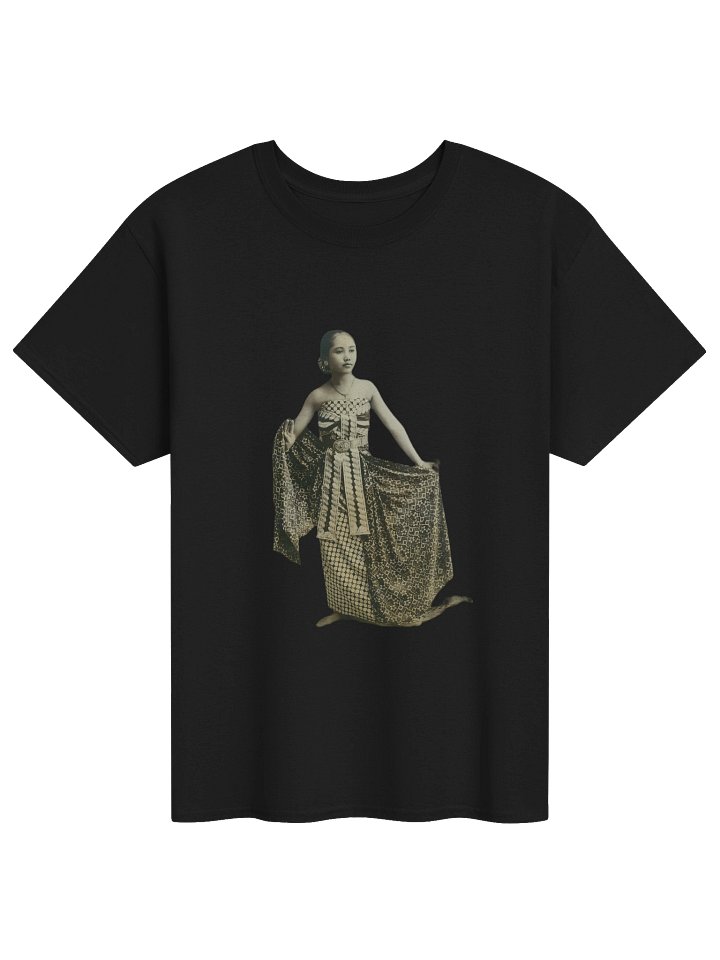
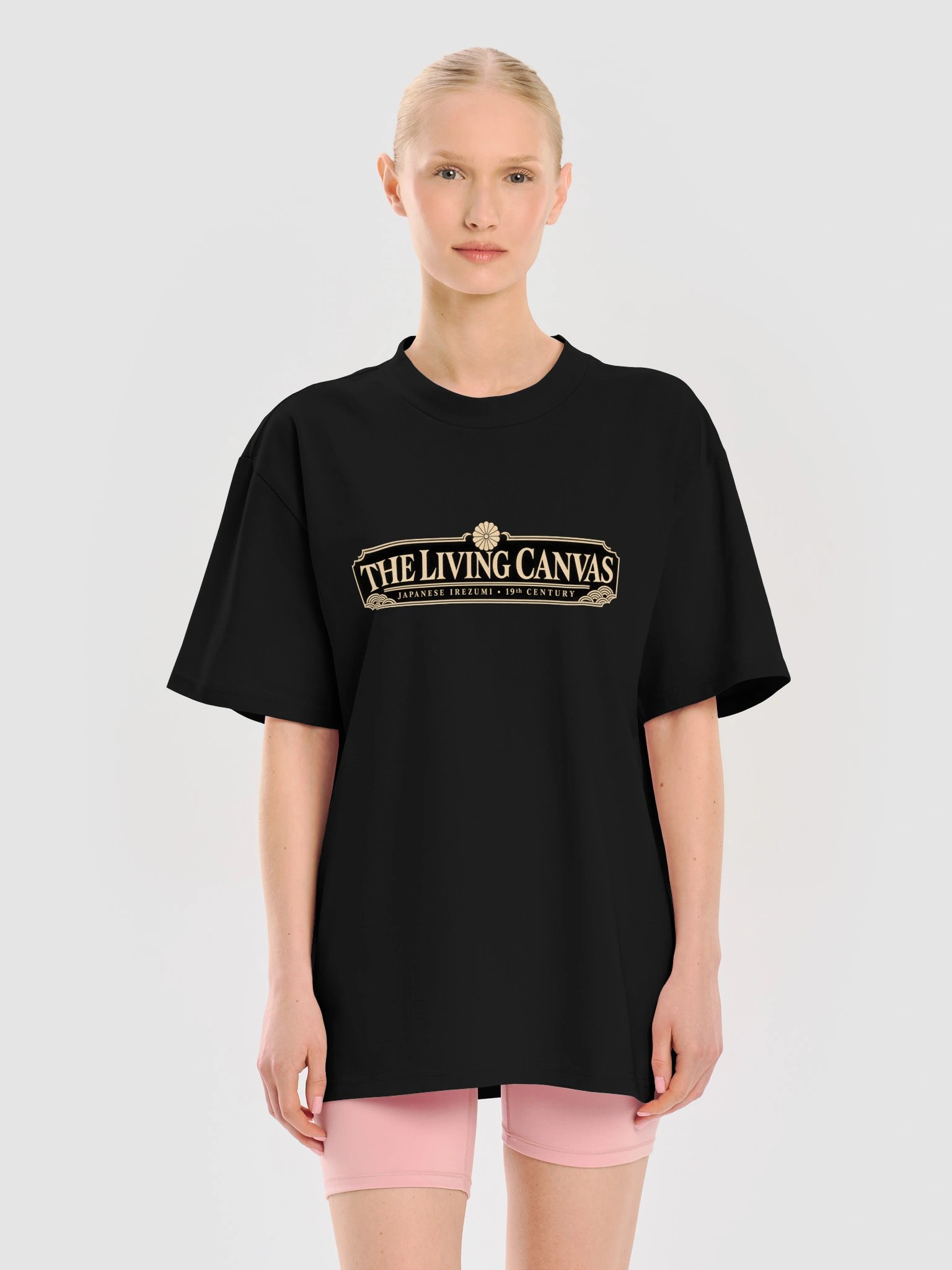
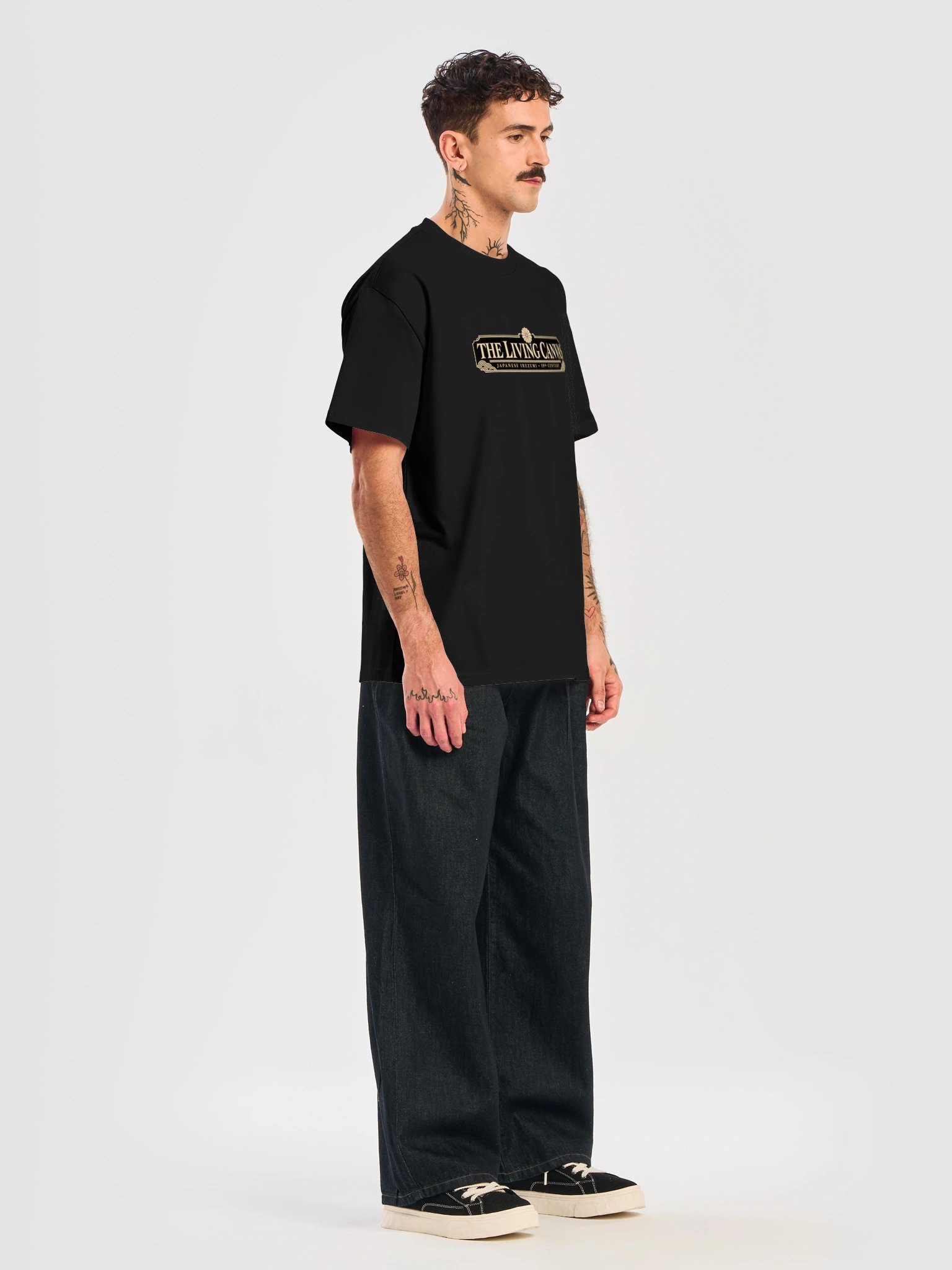
This black T-shirt combines historical Japanese photography with a specially designed typographic composition.
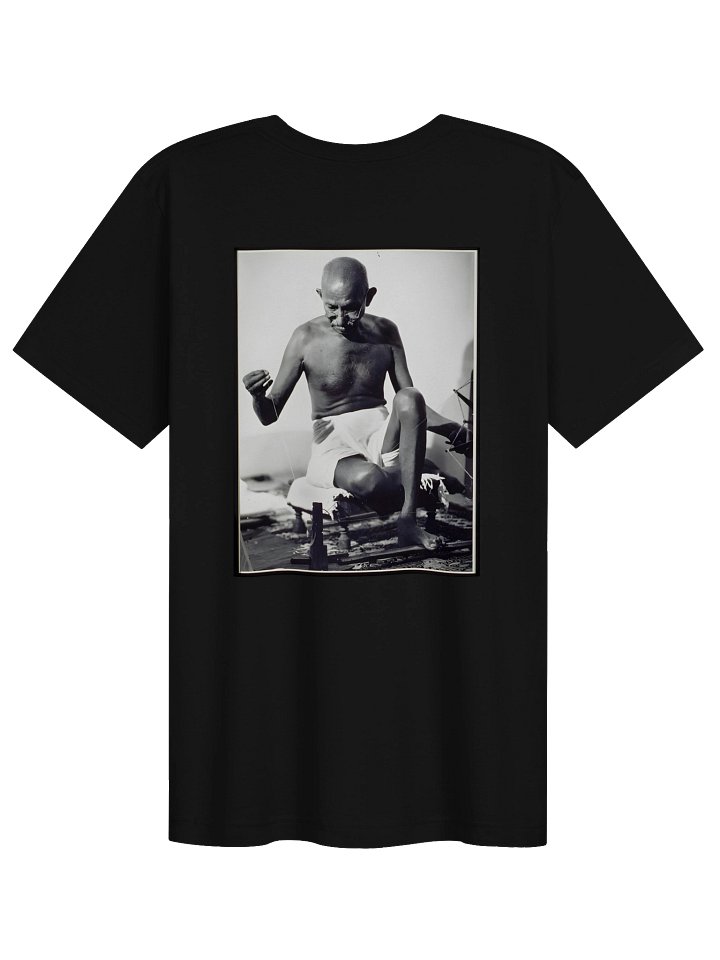
On the back, the hand-coloured portrait reveals the extraordinary artistry of traditional irezumi.
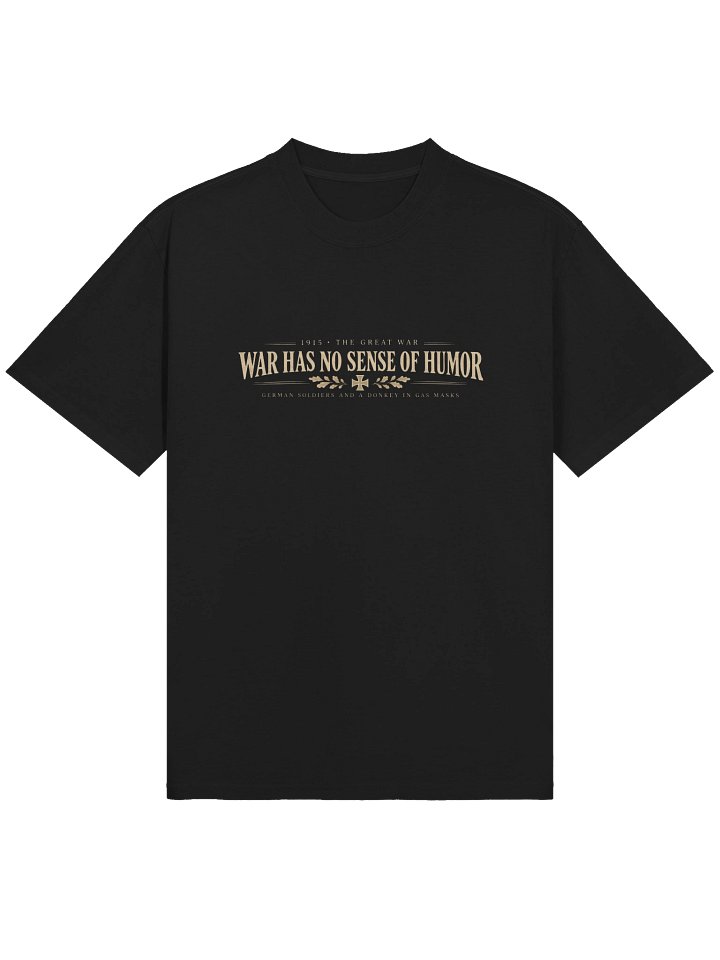
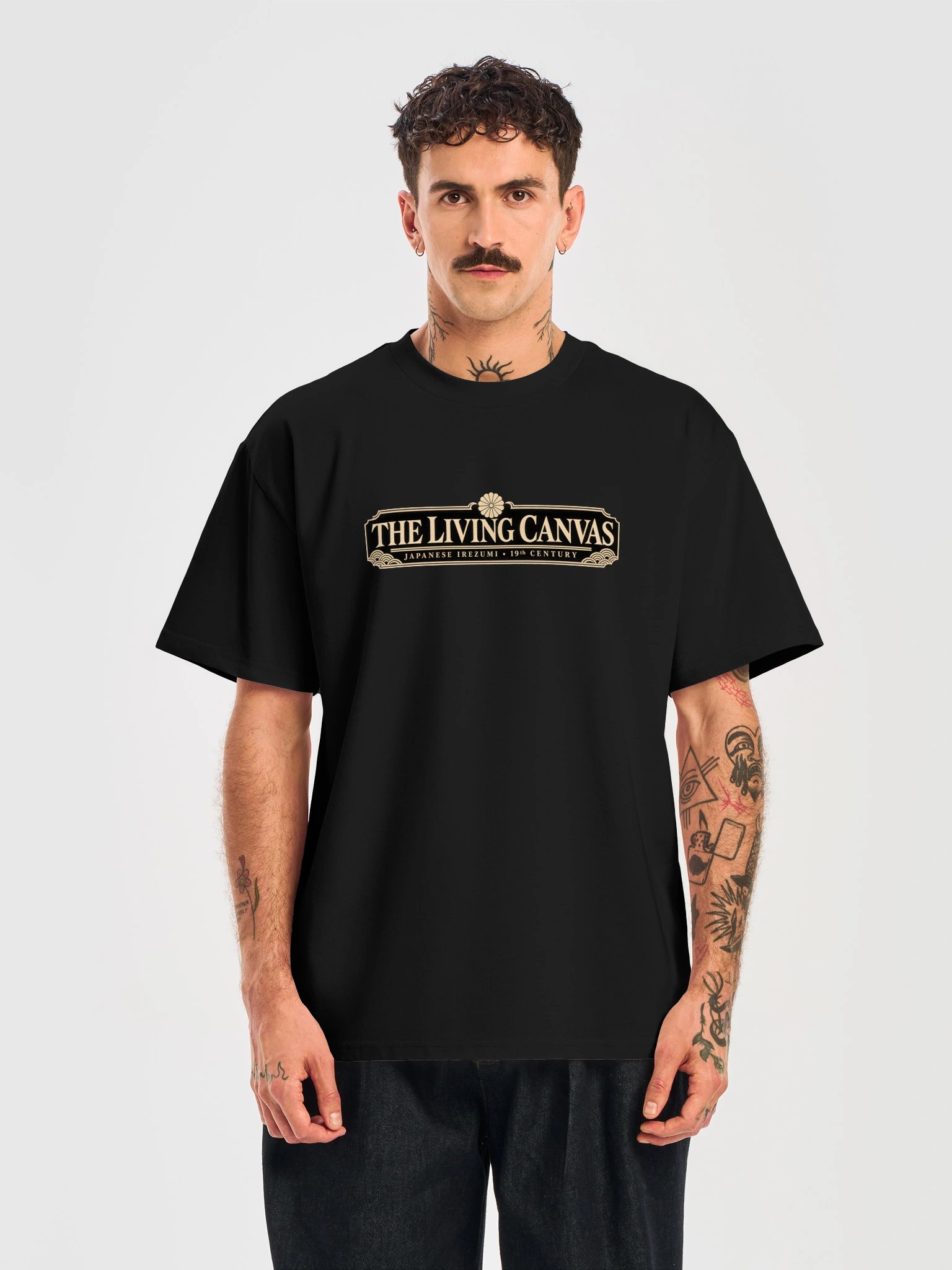
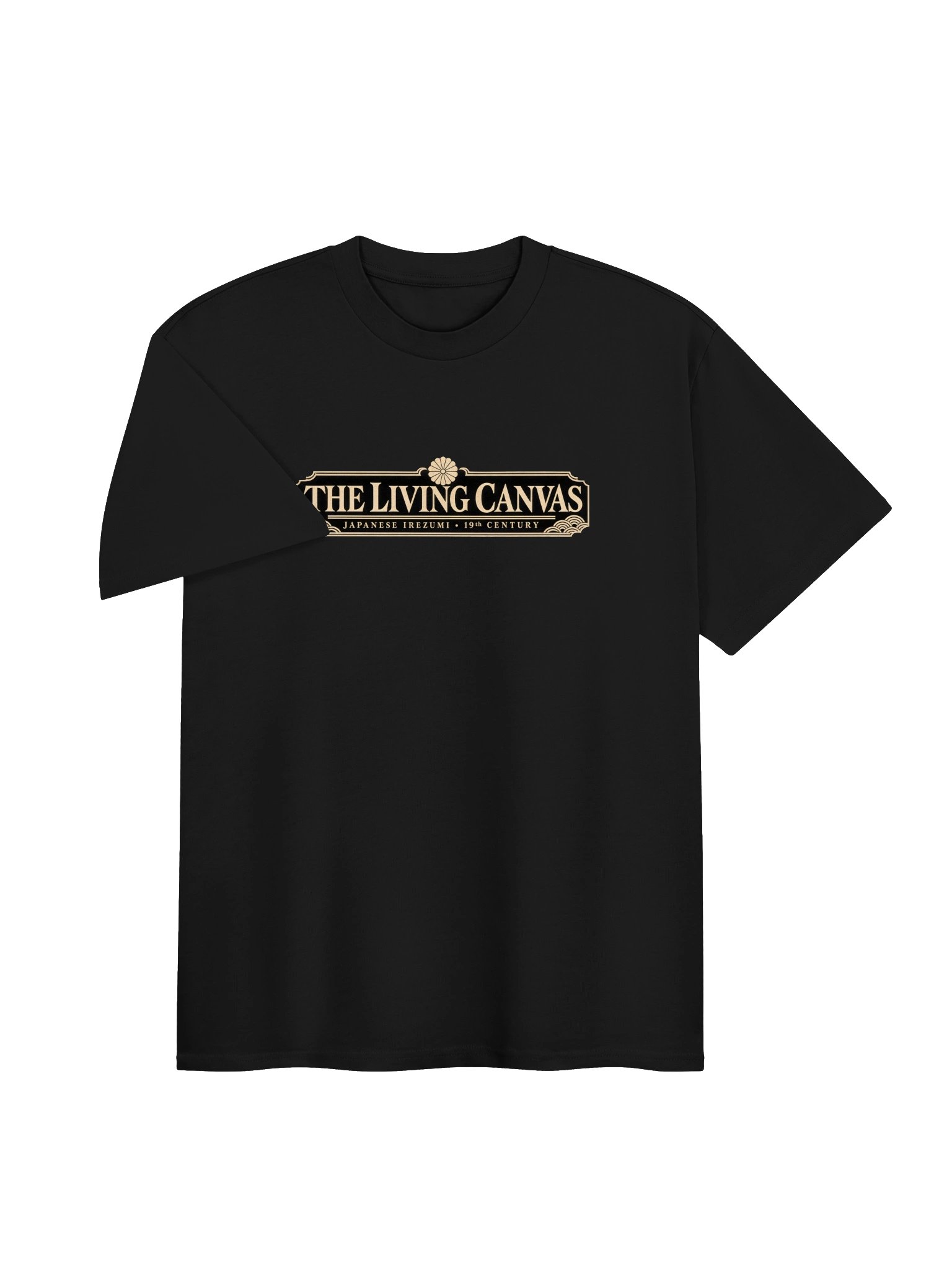
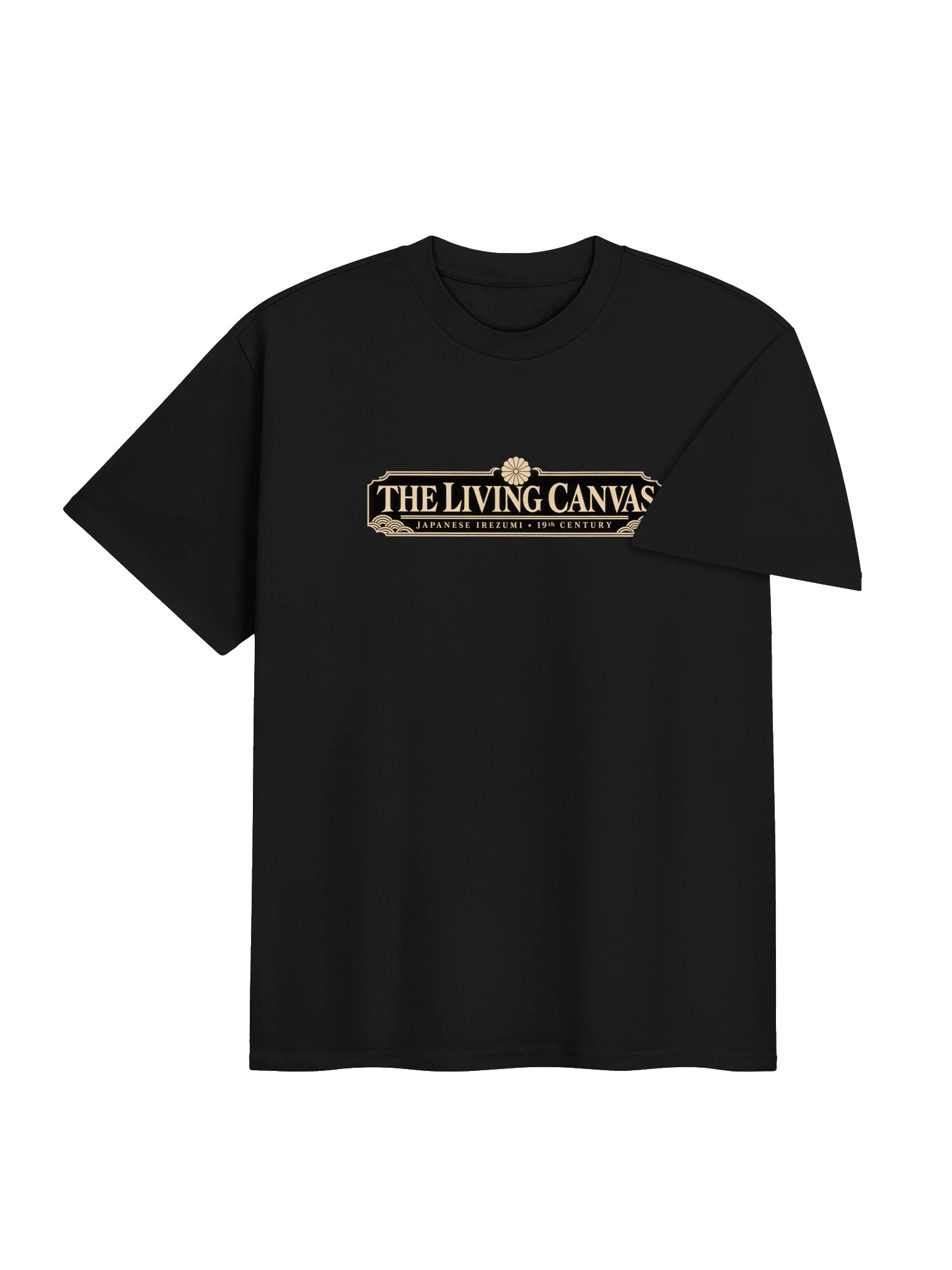
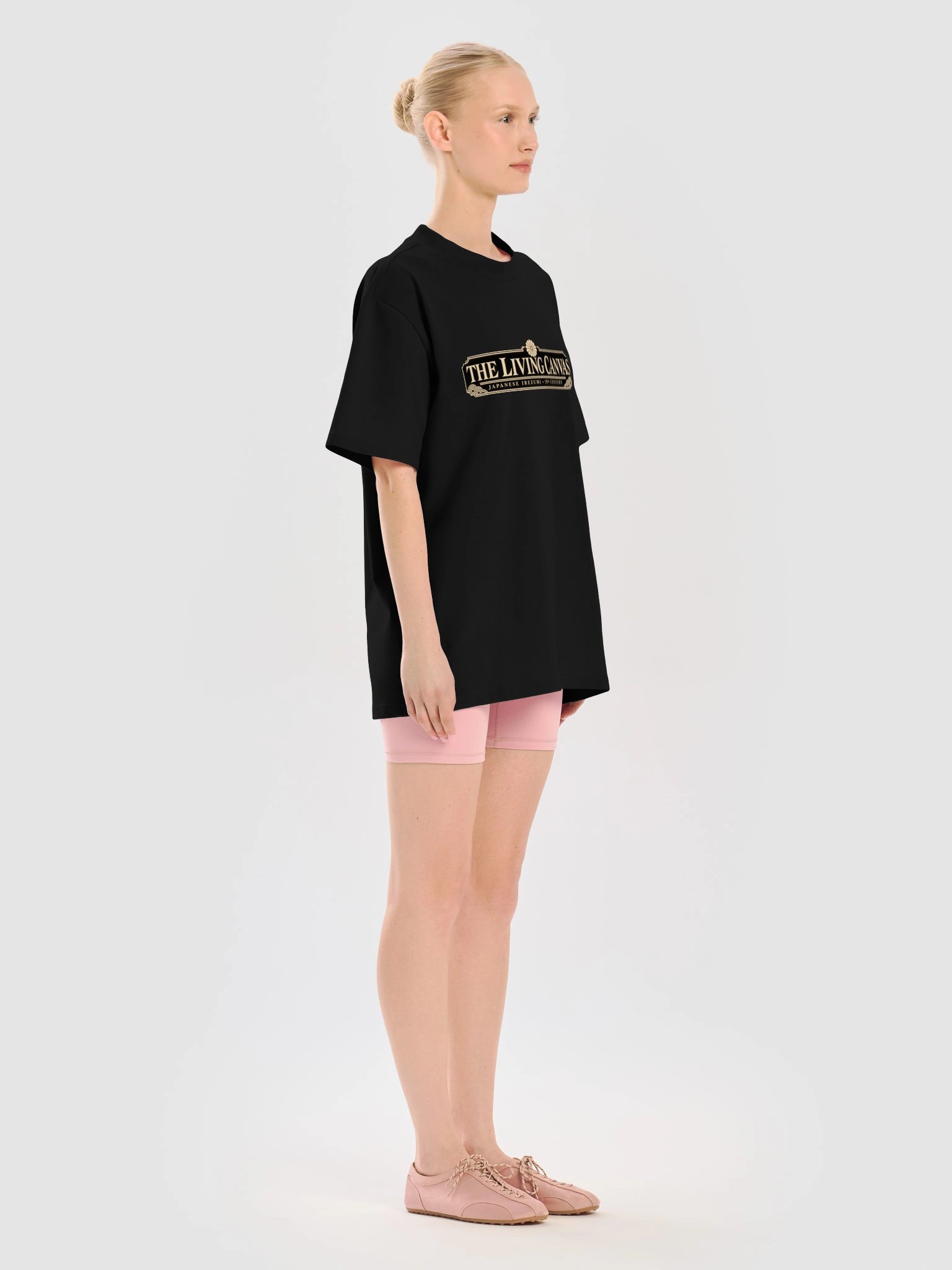
On the front, cream-coloured lettering reads:
THE LIVING CANVAS
JAPANESE IREZUMI · 19th CENTURY
The typography is inspired by the decorative language of Japanese prints and ornamental design from the Meiji period, combining elegant serif lettering with traditional wave motifs and a chrysanthemum ornament.
The front introduces the idea of the body as a living canvas. The back reveals the historical image behind it.
READING FRAMES — WEARABLE ARCHIVES
Reading Frames is an independent visual-history project and YouTube channel exploring archival photography, visual culture, and the stories preserved within historical images.
Our Wearable Archives collection brings remarkable photographs into contemporary clothing, connecting historical images with contemporary design.
Reading Frames — History, Reframed.
More details
- 100% carded cotton
- Heavyweight fabric (8.2 oz)
- Boxy fit
- Dropped shoulders
- Shoulder to shoulder tape
- Wide neck ribbing
- Double needle hems
- Pre-shrunk to minimise shrinkage
EU GPSR Product Information:
- Manufacturer contact information
- Name: Reading Frames
- Email: reading-frames-shop@support.fourthwall.com
- Postal address: PO Box 5696 Santa Monica, CA 90405
- Additional information: This product is made for adults. Meets the fire safety requirements. 2 year warranty in EEA and UK, established by Directive 1999/44/EC.
Quality Guarantee & Returns
- Quality is guaranteed. If there is a print error or visible quality issue, we'll replace or refund it.
- Because the products are made to order, we do not accept general returns or sizing-related returns.
The Living Canvas — Japanese Irezumi, 19th Century | Vintage Photography T-Shirt Size Guide

| Size label | Width | Length |
|---|---|---|
|
S
|
20
|
28.25
|
|
M
|
21 1/2
|
29 1/2
|
|
L
|
23.25
|
31
|
|
XL
|
24.75
|
32.25
|
|
2XL
|
26.25
|
33.75
|
|
3XL
|
28
|
34 1/2
|